
The Investment Property, Reimagined
Why the best-performing homes don’t feel like investments at all.
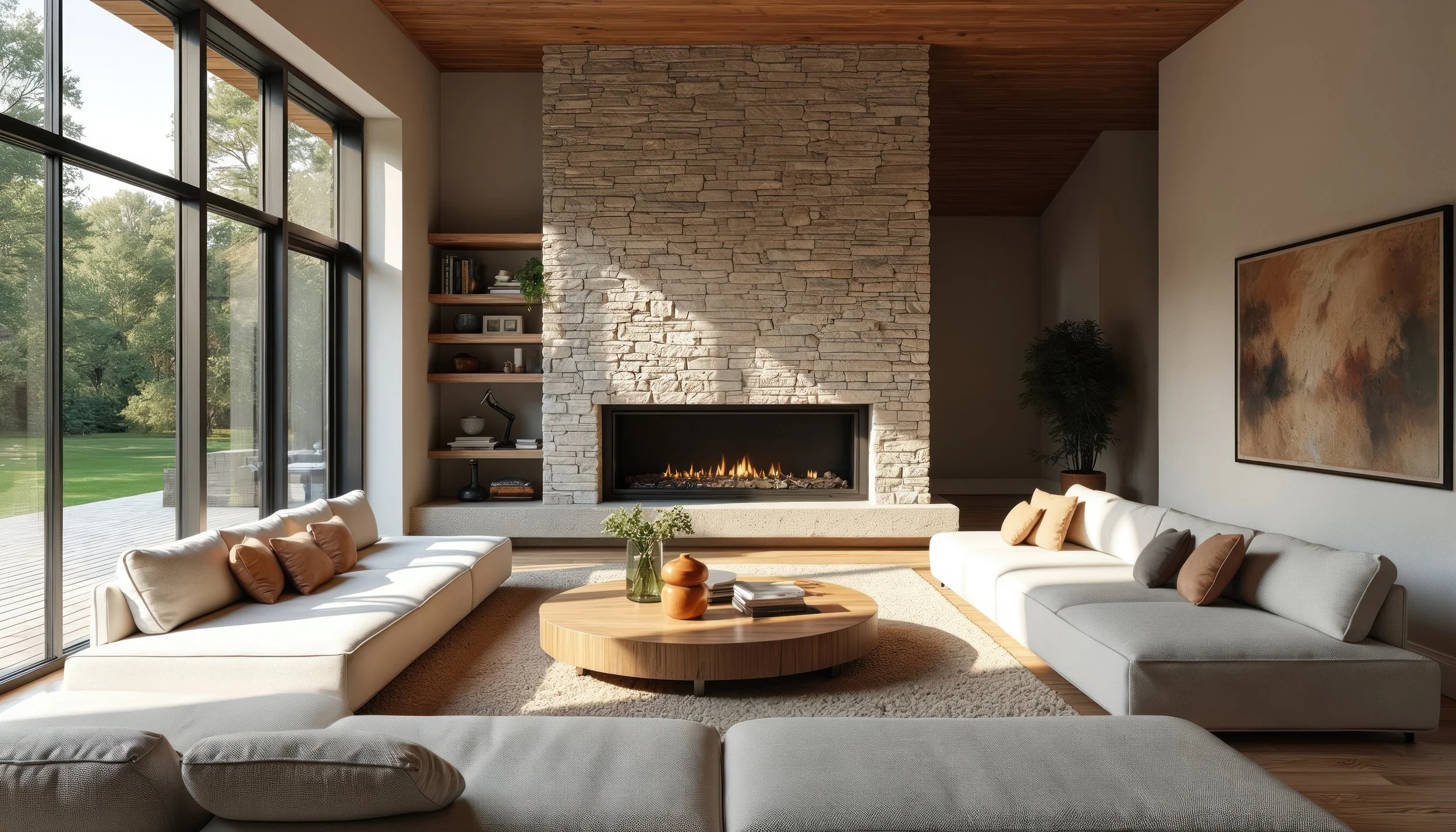
There’s a certain kind of investment property you come across every so often. It wasn’t designed to impress everyone, and it doesn’t try to. But the moment you step inside, or even scroll past it online, you feel it. A sense of ease. A quiet confidence. The kind of space that stays with you long after you’ve left.
Interestingly, these are often the properties performing best in the market. Not because they follow a formula, but because they don’t. They aren’t trying to look like investment properties. They’ve been designed to feel like something more.
The Problem With Playing It Safe
For years, the prevailing advice was simple: keep it neutral, don’t offend, and appeal to as many people as possible. And for a time, that approach worked.
But the market has shifted.
Today’s guest is more discerning. More design-aware. And faced with far more choices. A single search can surface dozens, sometimes hundreds, of options, all competing for the same attention. In that environment, “nice enough” fades into the background. It doesn’t create a reaction. It doesn’t invite a second look.
What once felt like a safe strategy has become a quiet limitation. Because safe rarely stands out. And if a property doesn’t stand out, it’s far less likely to be chosen.
Guests Don’t Book Properties. They Book a Feeling.
When someone chooses a short-term rental, they’re not simply selecting a place to stay. They’re imagining something.
A slower morning with coffee by the window.
A long dinner that stretches into the night.
A space that feels like a departure from their everyday life.
The highest-performing properties understand this. They aren’t designed room-by-room. They’re designed around moments. Around how a space unfolds and how it’s experienced over time.
A chair placed with intention, not just function.
A layout that encourages gathering without forcing it.
Lighting that feels considered, even if the guest can’t quite explain why.
Individually, these decisions may seem subtle. Together, they create something far more powerful: a property that feels lived in, even if only for a few days.
What Many Renovations Get Wrong
It’s not uncommon to see significant budgets poured into renovations that ultimately underperform. Not because they aren’t well executed, but because they lack a clear point of view. There’s often an emphasis on finishes over feeling. On trends over cohesion. On adding more, rather than refining what matters most.
The result is a space that looks “done,” but doesn’t feel distinct.
The properties that tend to perform differently share a quieter kind of clarity. They make confident decisions rather than safe ones. They focus attention where it will be felt most. They allow certain elements to lead, rather than trying to elevate everything equally.
It’s not about doing more. It’s about knowing what matters.
The Subtle Patterns of High-Performing Homes
Over time, a few patterns begin to emerge. Not as a checklist, but as a way of understanding what resonates. They photograph well, almost effortlessly. Not because they’ve been staged for the camera, but because they were designed with composition in mind.
They feel cohesive. Each space connects with the next in a way that feels intentional, not accidental.
They balance comfort with character. Nothing feels too precious, nothing feels forgettable either.
And perhaps most importantly, they leave an impression. Guests remember them. They talk about them. They return to them.
That kind of response can’t be engineered through finishes alone. It comes from a deeper level of consideration.
It Isn’t About Spending More
There’s a common assumption that better performance requires a larger budget. In reality, some of the most compelling properties are not the most expensive to build or furnish. They’re simply the most thoughtfully considered. They understand where investment creates impact, and where restraint creates clarity.
They avoid overdesigning.
They resist unnecessary upgrades.
They allow the strongest ideas to carry the space.
In many cases, it’s this sense of restraint that gives a property its edge.
A Different Way to Think About Investment Properties
If there’s one shift worth making, it’s this:
Rather than asking whether a property will appeal to everyone, it’s often more useful to ask who it’s really for.
The goal isn’t broad appeal. It’s resonance.
A property that feels immediately right to the right guest will almost always outperform one that tries to accommodate everyone. Because in a crowded market, clarity stands out. And when a space feels aligned, intentional, and easy to connect with, the decision to book becomes almost effortless.
Final Thoughts
The short-term rental market isn’t becoming simpler. If anything, it’s becoming more discerning. The properties that continue to perform are the the ones that understand something fundamental: design isn’t just aesthetic, it’s strategic.
It shapes how a space is experienced, how it’s remembered, and ultimately, how it performs. If you’re thinking about entering the market, or rethinking a property you already own, it may be worth approaching it a little differently.
And if you’re curious what that could look like in practice, we’re always happy to start that conversation.
